
Social Media Lead Generation: How to Generate More Leads
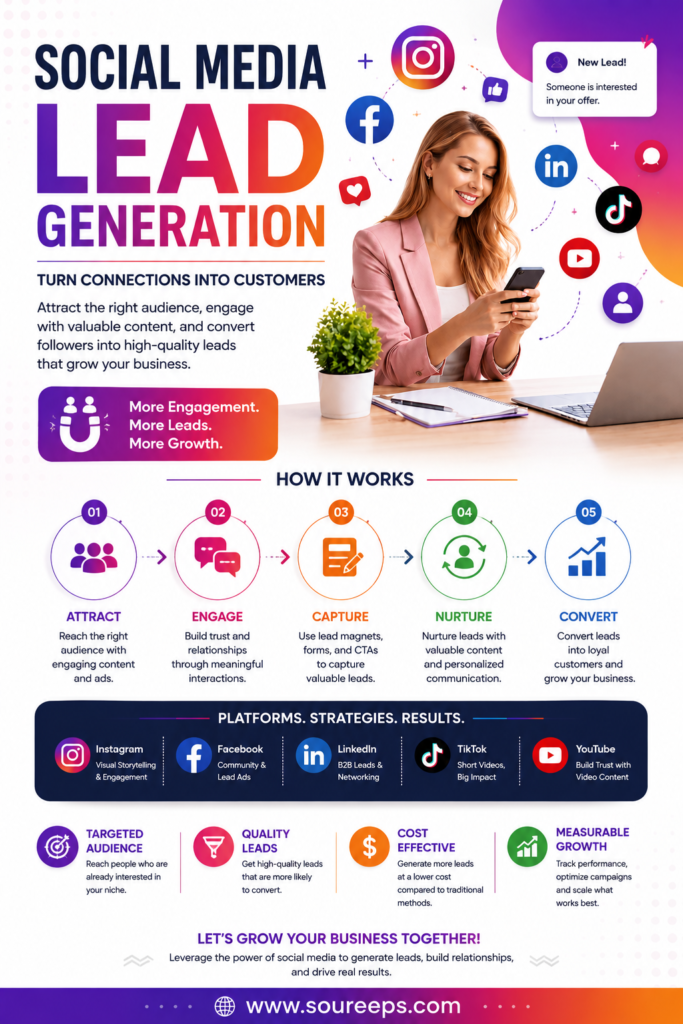
Social Media Lead Generation is the process of attracting potential customers through social media platforms and converting them into qualified leads. Businesses can use platforms such as Facebook, Instagram, LinkedIn, TikTok, and YouTube to reach their target audience, build relationships, promote products or services, and generate new business opportunities.
Today, social media is much more than a platform for sharing photos and videos. Customers use social media to discover brands, research products, read reviews, compare services, and make purchasing decisions. For this reason, an effective social media lead generation strategy can become an important part of a business’s digital marketing plan.
Why Is Social Media Lead Generation Important?
Social media allows businesses to reach a large and highly targeted audience without relying only on traditional marketing channels. Platforms provide detailed targeting options based on factors such as location, age, interests, profession, online behavior, and previous interactions.
Another major advantage is engagement. Businesses can communicate directly with potential customers through comments, messages, live videos, and social content. Regular engagement helps build trust and keeps a brand visible during the customer’s buying journey.
Social media also makes it easier to measure marketing performance. Businesses can track clicks, engagement, leads, conversion rates, and advertising costs to understand which campaigns are producing results.
How Does Social Media Lead Generation Work?
A successful social media lead generation campaign usually starts with understanding the target audience. Before creating content or running advertisements, businesses should identify who their ideal customers are, what problems they have, what solutions they need, and which social media platforms they use.
Once the audience is clearly defined, the next step is to create useful and relevant content. Educational posts, short videos, case studies, customer testimonials, guides, and industry insights can attract people who are interested in a particular product or service.
The goal is not simply to get likes or followers. The content should encourage users to take the next step, such as visiting a website, sending a message, downloading a guide, booking a consultation, or submitting a lead form.
Best Social Media Lead Generation Strategies
One of the most effective approaches is to create content around the problems and questions of your target audience. Instead of constantly promoting products, businesses should provide useful information that helps potential customers make better decisions. This builds authority and increases trust.
Lead magnets are another effective method. Businesses can offer valuable resources such as ebooks, checklists, free consultations, webinars, templates, reports, or free trials in exchange for contact information. The lead magnet should provide a clear benefit and solve a specific problem for the target audience.
Paid social media advertising can further increase reach and lead generation. Facebook, Instagram, LinkedIn, and TikTok provide advertising options that allow businesses to target specific audiences. Lead generation ads can also collect customer information directly within the platform, reducing the number of steps required to become a lead.
Retargeting is particularly useful for people who have already interacted with your business. Someone may visit your website, watch a video, interact with a post, or click an advertisement without becoming a customer immediately. Retargeting allows you to reach these users again with relevant content, offers, testimonials, or product information.
Businesses should also focus on conversations. Responding to comments and messages quickly can turn social media engagement into genuine sales opportunities. In many industries, customers need additional information before making a decision, so personalized communication can play an important role in lead conversion.
Social Media Lead Generation for B2B and B2C Businesses
The best social media lead generation strategy depends on the type of business.
For B2B businesses, LinkedIn is often an important platform because it provides access to professionals, business owners, managers, and decision-makers. Companies can use educational content, industry reports, webinars, case studies, and LinkedIn Lead Gen Forms to attract potential clients.
For B2C businesses, platforms such as Facebook, Instagram, TikTok, and YouTube can be highly effective. Visual content, product demonstrations, customer reviews, influencer marketing, special offers, and short-form videos can help businesses attract and convert consumers.
The important factor is to choose platforms based on where your target customers actually spend their time rather than trying to be active on every social network.
How to Convert Social Media Leads Into Customers
Generating a lead is only the beginning. Businesses need a proper follow-up process to convert leads into customers.
When someone submits a form or sends a message, responding quickly can improve the chances of conversion. Businesses can use email marketing, personalized messages, educational content, product demonstrations, and consultations to nurture prospects.
Lead scoring can also help identify which prospects are more likely to purchase. For example, someone who downloads a guide and requests a product demo may have stronger buying intent than someone who only likes a social media post.
A CRM system can help businesses organize lead information, track interactions, schedule follow-ups, and understand where each prospect is in the sales process.
How to Measure Social Media Lead Generation
The success of a social media lead generation campaign should not be measured only by followers, likes, or impressions. Businesses should focus on metrics that are directly connected to leads and revenue.
Important metrics include conversion rate, cost per lead, click-through rate, lead quality, lead-to-customer rate, and return on investment. Tracking these metrics helps businesses identify which platforms, content types, advertisements, and offers are generating the best results.
For example, if an Instagram campaign generates many clicks but very few qualified leads, the problem may be with the offer or landing page rather than the advertisement itself. Regular testing and optimization can improve campaign performance over time.
Social Media Lead Generation Best Practices
A successful strategy starts with a clearly defined target audience and valuable content. Businesses should use strong calls-to-action, make lead forms simple, respond quickly to inquiries, and consistently test different content and advertising approaches.
It is also important to maintain transparency when collecting customer information and to follow applicable privacy and data protection requirements. Building trust should be a priority throughout the entire lead generation process.
Final Thoughts
Social Media Lead Generation is one of the most effective ways for modern businesses to connect with potential customers and build a consistent sales pipeline. However, successful lead generation is not about collecting as many contacts as possible. It is about attracting the right audience, providing valuable information, building trust, and guiding prospects toward a purchase.
By combining organic content, paid advertising, lead magnets, retargeting, social engagement, and proper lead nurturing, businesses can turn social media from a simple awareness channel into a powerful source of qualified leads and long-term customers.
Frequently Asked Questions – FAQ’s
Q. What is social media lead generation?
A. Social media lead generation is the process of attracting potential customers through platforms such as Facebook, Instagram, LinkedIn, TikTok, and YouTube and converting their interest into qualified leads. This can happen through content, lead forms, advertisements, messages, webinars, or other conversion-focused activities.
Q. Why is social media lead generation important?
A. Social media lead generation helps businesses reach targeted audiences, build relationships, increase brand visibility, and generate potential customers. It also allows businesses to track campaign performance and optimize their marketing efforts based on real data.
Q. Which social media platform is best for lead generation?
A. The best platform depends on your target audience and business type. LinkedIn is often effective for B2B lead generation, while Facebook and Instagram can work well for B2C businesses. TikTok and YouTube can also generate leads through engaging video content and targeted campaigns.
Q. How can I generate leads on social media?
A. You can generate leads by creating valuable content, optimizing your social profiles, using lead magnets, running targeted social media ads, engaging with your audience, using lead generation forms, and retargeting people who have previously interacted with your business.
Q. What is a social media lead magnet?
A. A lead magnet is a valuable resource offered to potential customers in exchange for their contact information. Examples include ebooks, checklists, free consultations, webinars, templates, reports, free trials, and guides.
Q. Are social media ads effective for lead generation?
A. Yes. Social media advertising can be highly effective because platforms allow businesses to target users based on demographics, interests, location, behavior, and other audience characteristics. Lead ads can also reduce friction by allowing users to submit their information directly within the platform.
Q. How do I convert social media leads into customers?
A. Converting leads requires timely follow-up and consistent nurturing. Businesses can use personalized messages, email campaigns, product demonstrations, consultations, testimonials, and relevant content to build trust and move prospects toward a purchase.
Q. How do you measure social media lead generation?
A. Common metrics include conversion rate, cost per lead (CPL), click-through rate (CTR), lead quality, lead-to-customer rate, and return on investment (ROI). These metrics help businesses understand whether their social media campaigns are generating valuable leads.
Q. Is social media lead generation suitable for small businesses?
A. Yes. Small businesses can use organic content, local targeting, social media advertising, direct messages, customer reviews, and lead magnets to attract potential customers without requiring a large marketing budget.
Q. What is the difference between social media marketing and social media lead generation?
A. Social media marketing focuses on building awareness, engagement, and relationships with an audience, while social media lead generation focuses specifically on turning interested users into potential customers by collecting leads and encouraging conversion actions.