
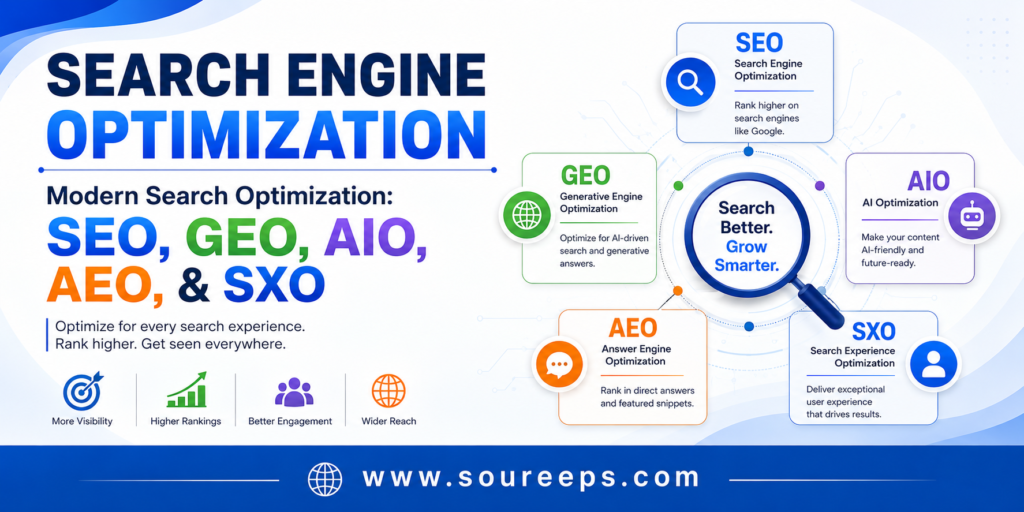
Modern Search Optimization: SEO, GEO, AIO, AEO, & SXO
Search optimization in 2026 is no longer just about ranking on Google. The digital ecosystem now includes AI-powered search engines, voice assistants, generative AI tools, answer engines, and experience-driven algorithms. Traditional SEO still matters, but businesses must now optimize for humans, search engines, and artificial intelligence simultaneously.
Modern website optimization combines:
SEO (Search Engine Optimization)
GEO (Generative Engine Optimization)
AIO (AI Optimization)
AEO (Answer Engine Optimization)
SXO (Search Experience Optimization)
Brands that adapt to these changes will dominate search visibility, while outdated tactics like keyword stuffing and mass low-quality backlinks continue losing effectiveness.
What is SEO in 2026?
Search Engine Optimization remains the process of improving website visibility in organic search results. However, Google’s algorithms are now heavily AI-driven and focused on user satisfaction, topical authority, and trust signals.
Search engines evaluate:
Content usefulness, User behavior, Website experience, Brand authority, Semantic relevance, Real expertise
Core SEO Ranking Factors in 2026
Search Intent Optimization
Google now prioritizes pages that perfectly match user intent instead of pages that simply contain keywords.
Content must satisfy:
Informational intent, Commercial intent, Transactional intent, Navigational intent
Topical Authority
Publishing random blogs no longer works. Websites need strong topic clusters that demonstrate expertise within a niche.
For example:
SEO agency websites should cover technical SEO, local SEO, link building, schema markup, AI SEO, content optimization, and analytics comprehensively.
Technical SEO
Technical optimization remains critical.
Important factors include:
Core Web Vitals, Mobile-first performance, Fast page speed, Crawlability, Schema markup, HTTPS security, Clean URL structures, XML sitemaps
E-E-A-T Signals
Google heavily evaluates:
Experience, Expertise, Authoritativeness, Trustworthiness
Websites with strong branding, real author profiles, reviews, citations, and business credibility perform significantly better.
GEO in 2026: Generative Engine Optimization
What is GEO?
Generative Engine Optimization focuses on optimizing content for AI-generated search experiences such as:
OpenAI ChatGPT, Google AI Overviews, Microsoft Copilot, Perplexity AI Perplexity
Instead of showing only links, AI systems now generate direct answers using trusted web sources.
Why GEO Matters in 2026
Millions of users now search through AI assistants instead of traditional search engines. If your content is not AI-readable, your visibility drops significantly.
AI engines prefer:
Clear answers, Structured content, Trusted sources, Verified facts, Expert-level explanations, GEO Best Practices, Create Citation-Worthy Content
AI systems prefer authoritative information backed by:, Statistics, Research, Examples, Case studies, Expert insights
Use Structured Formatting
AI can better understand:
Headings, Bullet points, Tables, FAQs, Definitions
Build Entity Authority
Search engines now rely heavily on entity understanding and knowledge graphs.
Businesses should strengthen:
Brand mentions, Author profiles, Business citations, Social presence, Consistent NAP details
Optimize for Conversational Queries
People now search naturally using questions like:
“Which SEO strategy works best in 2026?”
“How can AI improve website rankings?”
Content should mirror natural language conversations.
AIO in 2026: AI Optimization
What is AIO?
AI Optimization ensures content is understandable by artificial intelligence systems across:
Search engines, Recommendation systems, Voice assistants, AI chatbots, Social algorithms
AIO is broader than GEO because it covers all AI-driven discovery systems.
AIO Strategies for Websites, Semantic Content Structure
Use:
Proper heading hierarchy, Contextual internal links, Entity-based optimization, Semantic HTML
Machine-Readable Metadata
AI systems rely heavily on:
Alt text, Schema markup, Product metadata, Video transcripts, Image descriptions, Content Clustering, Connected content improves AI understanding.
Example:
A digital marketing website should internally connect:
SEO, Local SEO, AI SEO, Technical SEO, Content marketing, Link building
Natural Language Optimization
AI systems now prioritize content written naturally rather than robotic keyword-heavy text.
AEO in 2026: Answer Engine Optimization
What is AEO?
Answer Engine Optimization focuses on winning:
Featured snippets, AI answers, Voice search responses, Knowledge panels, People Also Ask results
Google increasingly answers user questions directly without requiring clicks.
Why AEO Is Important
AEO increases:
Brand visibility, Authority, Voice search presence, Click-through potential, AI citations, AEO Best Practices
Use Question-Based Headings
Example:
What is Technical SEO?
How Does GEO Work?
Why Is SXO Important?
Provide Direct Answers First
The first paragraph should immediately answer the query clearly.
Use FAQ Schema
FAQ structured data improves eligibility for:
Rich snippets, AI summaries, Voice assistant results, Optimize for Voice Search, Voice searches are longer and conversational.
Example: Instead of:
“SEO company Kolkata”
Users now ask:
“Which is the best SEO company in Kolkata for local businesses?”
SXO in 2026: Search Experience Optimization
What is SXO?
Search Experience Optimization combines:
SEO, UX Design, Conversion Optimization, Performance Optimization, The goal is not just rankings — it’s user satisfaction.
Why SXO Dominates in 2026
Google now tracks user engagement signals including:
Bounce rate, Dwell time, Interaction quality, Page engagement, Navigation behavior
If users dislike your website experience, rankings decline.
SXO Optimization Factors, Page Speed
Fast-loading websites perform better in:
Rankings, Conversions, Engagement, Mobile Experience, Most users browse on mobile devices., Your website must have:, Responsive layouts, Touch-friendly buttons, Readable fonts, Fast mobile loading, Readability, Modern users skim content quickly.
Use:
Short paragraphs, Bullet points, Clear headings, Visual spacing
User Journey Optimization
Guide visitors smoothly toward:
Contact forms, Purchases, Calls, Leads, Conversions
Accessibility
Websites should support:, Screen readers, Keyboard navigation, Proper contrast ratios, Accessible media
Accessibility improves both UX and SEO performance.
The Future of Website Optimization
Search is becoming:
AI-driven, Conversational, Personalized, Experience-focused
Future-ready websites must combine:
SEO, AI optimization, User experience, Authority building, Structured content
The businesses that win in 2026 will be those that create genuinely useful content while delivering exceptional user experiences across all devices and platforms.
Frequently Asked Questions (FAQ) –
Q. What is Search Engine Optimization (SEO)?
A. Search Engine Optimization (SEO) is the process of improving a website’s visibility on search engines like Google. It helps websites rank higher for relevant keywords, increase organic traffic, and generate more leads or sales.
Q. Why is SEO important for businesses?
A. SEO helps businesses attract targeted visitors from search engines without paying for ads. A well-optimized website improves online visibility, brand credibility, user experience, and long-term business growth.
Q. How long does SEO take to show results?
A. SEO is a long-term strategy. Most websites start seeing noticeable improvements within 3 to 6 months, depending on competition, website condition, and the SEO strategy implemented.
Q. What is Local SEO?
A. Local SEO helps businesses rank in local search results and Google Maps. It includes Google Business Profile optimization, local citations, reviews, and location-based keyword targeting.
Q. Why choose professional SEO services?
A. Professional SEO services help businesses implement effective strategies, avoid ranking penalties, improve technical performance, and achieve long-term online growth.